Every drone programme eventually hits the same fork in the road, usually after the second hardware revision: the flight controller firmware you picked in a hurry is now load-bearing. Changing it costs a full re-tune, a new ground station workflow and a fresh round of field tests. The three stacks that dominate open flight control in 2026 — ArduPilot, PX4 and Betaflight — look interchangeable from the outside and are anything but on the inside. The decisive difference is usually licensing and vehicle scope, not feature lists.
TL;DR: Quick Verdict
- ArduPilot for the widest vehicle coverage and the most autonomy-focused mission tooling — multirotors, planes, rovers, boats, submarines and antenna trackers from one codebase. GPL-3.0, which matters if you ship closed hardware.
- PX4 if you are building an industrial or research platform that must integrate with ROS 2, or if you need a business-friendly BSD 3-Clause licence inside a commercial product. Vendor-neutral governance under the Dronecode Foundation.
- Betaflight for racing, freestyle, cinematic and long-range FPV — a firmware optimised for flight feel, latency and tuning depth rather than autonomous waypoint missions.
- The middle ground: iNav (4,258 stars) for navigation-oriented fixed-wing and long-range builds that want Betaflight-style tuning with waypoint capability.
The Comparison Table (GitHub data, 8 October 2026)
| Dimension | ArduPilot | PX4 | Betaflight |
|---|---|---|---|
| Repository | ArduPilot/ardupilot | PX4/PX4-Autopilot | betaflight/betaflight |
| Stars | 16,015 | 12,758 | 11,625 |
| Last push | 2026-10-08 | 2026-10-08 | 2026-10-08 |
| Language | C++ | C++ | C |
| Licence | GPL-3.0 | BSD 3-Clause | GPL-3.0 |
| Vehicle scope | Multirotor, plane, rover, sub, antenna tracker | Multirotor, fixed-wing, VTOL, rovers | Racing, freestyle, cinematic, long range, micros, wings |
| Middleware | MAVLink | uORB publish/subscribe + DDS / ROS 2 (XRCE-DDS) + MAVLink | MSP for configuration; CRSF, FrSky, HoTT telemetry |
| Simulation | SITL via sim_vehicle.py | px4io/px4-sitl container or make px4_sitl | SITL support in the firmware build |
| Primary GCS / config | Mission Planner, MAVProxy, QGroundControl | QGroundControl | Betaflight App (progressive web app) |
| Governance | Community project (since 2010) | Dronecode Foundation / Linux Foundation | Community project |
Decision Matrix: Pick in Ten Seconds
| Your requirement | Use | Why |
|---|---|---|
| Autonomous waypoint survey, plane or VTOL, one codebase for many vehicle types | ArduPilot | Broadest vehicle support plus mature mission tooling |
| ROS 2 integration, research or industrial inspection platform | PX4 | First-class DDS/ROS 2 bridge and modular uORB architecture |
| Shipping a commercial product with closed-source components | PX4 | BSD 3-Clause avoids the GPL-3.0 obligations of the alternatives |
| FPV racing, freestyle or cinematic flying | Betaflight | Tuned for latency, flight feel and deep PID/filter control |
| Long-range FPV with waypoints but Betaflight-style handling | iNav | Navigation features layered on familiar tuning |
| Submarine, boat or antenna tracker | ArduPilot | ArduSub and AntennaTracker are part of the same project |
| You want to fly in simulation first, in one command | PX4 | Official SITL container needs no build toolchain |
ArduPilot — The Broadest Vehicle Platform
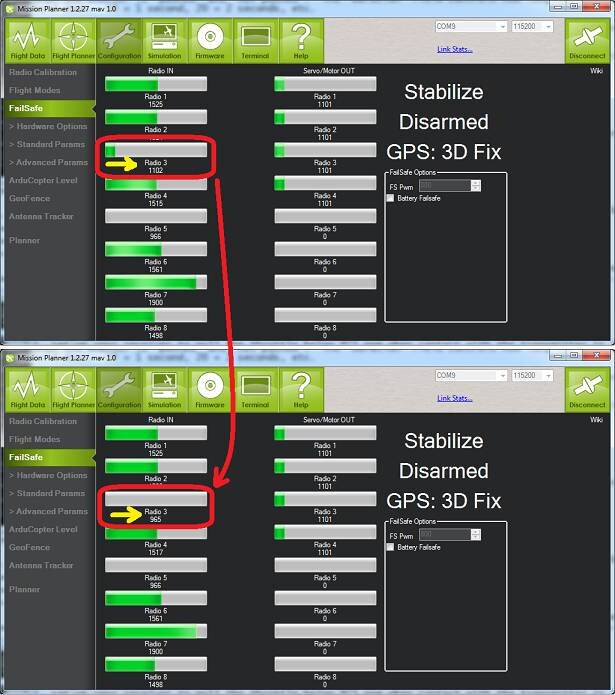
ArduPilot has been under continuous development since 2010 and is licensed GPL-3.0. Its defining trait is breadth: a single repository contains ArduCopter, ArduPlane, Rover, ArduSub and AntennaTracker, which is why it keeps showing up in environments that are not “a drone” at all — agricultural rovers, survey boats, inspection submarines.
Its continuous integration is unusually thorough for flight software, with separate test matrices for copter, plane, rover, sub, tracker, plus ChibiOS builds, Linux single-board-computer builds, replay testing and unit tests. If you are choosing a stack for a multi-year programme, that test breadth is a stronger signal than any feature table.
The canonical developer workflow — build and fly in simulation — is well documented and uses waf as the build system:
| |
sim_vehicle.py is the workhorse: it starts the simulated vehicle, wires up the MAVLink endpoints and gives you the console and moving map in one shot. The project also ships a Dockerfile at the repository root for containerised builds, which is the sane way to keep a reproducible toolchain on a shared build server.
The trade-off to price in: GPL-3.0. If your business model depends on shipping proprietary firmware derived from ArduPilot, that licence is a legal blocker, not a footnote. Many commercial teams run ArduPilot happily because they integrate around it rather than modify it — but have that conversation before the pilot, not after.
PX4 — Modular, ROS-Friendly and Business-Licensed
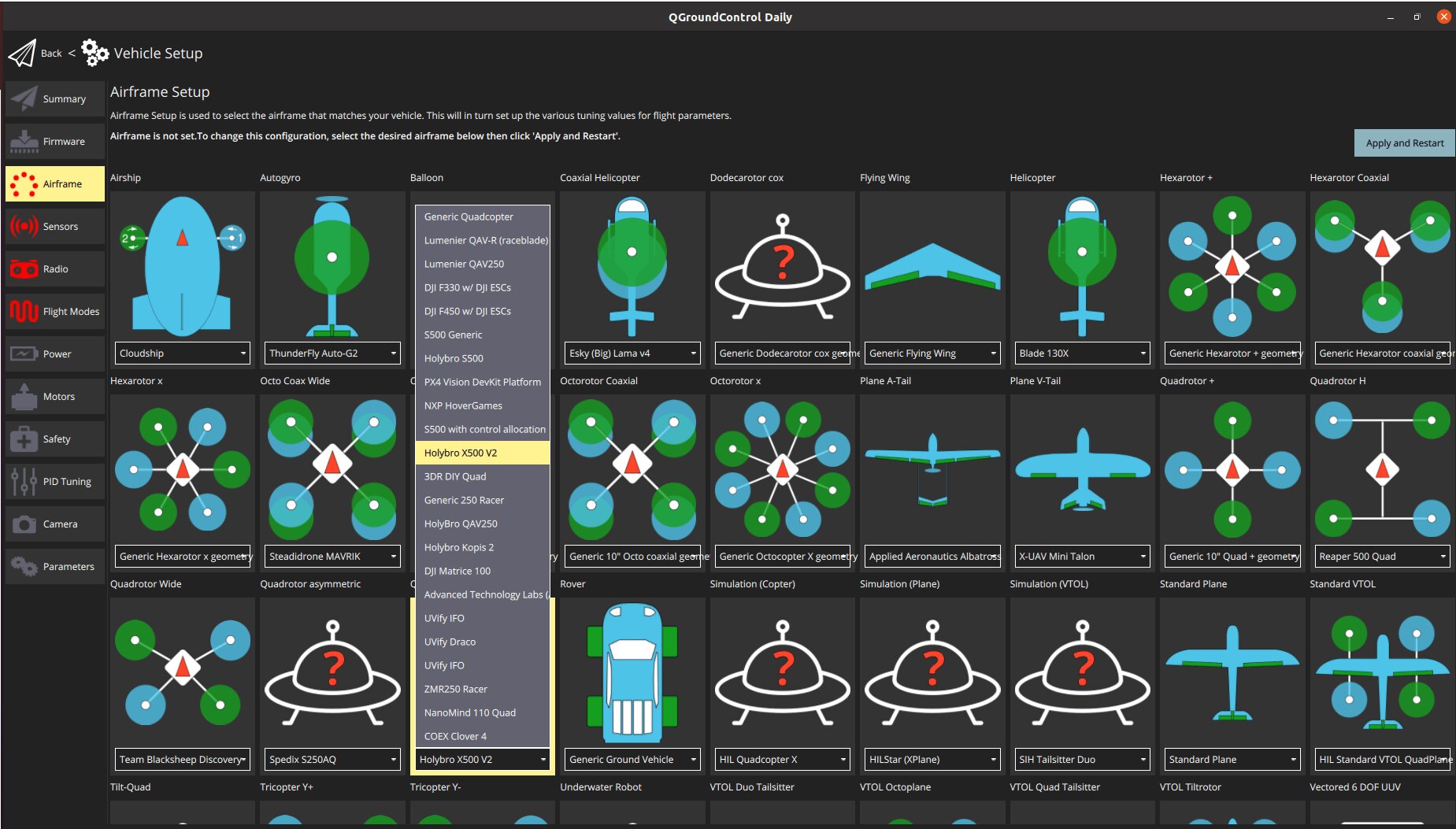
PX4 is the stack that industrial teams tend to reach for, and the reason is architectural. It is built around uORB, a publish/subscribe middleware where modules are parallelised and thread-safe, and it exposes a DDS-compatible bridge so ROS 2 nodes can subscribe to vehicle state and command the vehicle without a bespoke translation layer. If your roadmap includes a companion computer running perception or planning code, this is the integration path with the least glue code.
Two more decisive properties. PX4 is licensed BSD 3-Clause, which is the single most important line in this article for anyone building a commercial product on top of flight control. And it is governed under the Dronecode Foundation, part of the Linux Foundation, with an explicit vendor-neutrality mandate — no single manufacturer controls the roadmap.
PX4 also has the cleanest “prove it works before you buy hardware” story. The README documents a simulation path that needs no build tools and no dependencies beyond Docker:
| |
For development from source, the build target is equally short:
| |
That command starts the autopilot stack against a simulated airframe with the MAVLink endpoint exposed on the default port — the same port the container exposes above, so your ground station connects identically in both cases.
The trade-off: PX4’s modularity has a learning curve. Coming from simpler firmware, the module graph, parameter system and logging pipeline take real time to internalise. The payoff arrives when you need to replace exactly one component without disturbing the rest — which is precisely when the alternatives hurt.
Betaflight — Flight Feel First
Betaflight is what most FPV pilots actually run, and its feature list reads like a latency obsessive’s wish list: DShot 150/300/600, Multishot, Oneshot 125/42 and Proshot1000 motor protocols; Blackbox flight logging to onboard flash or microSD; in-flight manual PID and rate adjustment; PID and filter tuning with sliders; rate profiles switchable in flight; telemetry across CRSF, FrSky, HoTT and MSP; plus RGB LED strips, OLED displays and OSD support without third-party hardware.
Board support is broad and pragmatic: STM32 F4, F7, G4, H5 and H7 targets, plus AT32F435, APM32 and RP2350, with ESP32 and C5/N6 silicon in developer preview — and a hardware policy that explicitly states which targets are maintained. For anyone who has chased a half-supported flight controller, that policy is refreshing.
Development is containerised, which makes the build reproducible:
| |
Configuration is done with the Betaflight App, a progressive web app that is always current — no more “download the right configurator version for your firmware” ritual. Betaflight is licensed GPL-3.0, the same consideration as ArduPilot for commercial firmware work.
The trade-off: Betaflight’s centre of gravity is manual flight. It is not the stack for a multi-kilometre autonomous inspection mission; that is where ArduPilot or PX4 win, and where iNav sits as a compromise. Choose it because you care about how the aircraft feels, and because the tuning ecosystem around it is unmatched for small multirotors.
Pitfalls That Actually Bite
- Check the licence before you design the product. ArduPilot and Betaflight are GPL-3.0; PX4 is BSD 3-Clause. This is the single most expensive decision in the table and it has nothing to do with features.
- Do not port PID values between stacks. Tuning is coupled to the control loop and firmware defaults. Starting from another stack’s numbers usually produces a worse-flying aircraft than starting from a documented default and tuning once, properly.
- Board support is not uniform across vendors. Betaflight’s hardware policy problem — target proliferation — is real across the ecosystem. Verify the specific flight controller revision you are buying has a maintained target before you order a production batch.
- SITL success is not airworthiness. Simulation catches wiring and logic errors, not vibration, magnetic interference or a badly mounted GPS. Treat every stack’s simulated result as a prerequisite for flight testing, never as a substitute.
- Companion computers change the equation. If you are adding an onboard Linux computer for payload processing, the middleware (uORB/DDS vs MAVLink) decides how much integration work you inherit. PX4 leads here; ArduPilot’s Linux SBC build support is the pragmatic alternative.
- Pin your versions. Flight controllers get flashed in the field, and “latest” is not a version. Keep the exact firmware release in your configuration management alongside your parameters.
- Read the parameters, not just the manual. On every one of these stacks the parameters encode the safety-relevant behaviour (failsafe actions, battery thresholds, geofences). Review them as code before a mission, and diff them between builds.
FAQ
Which open autopilot has the most permissive licence for commercial products? PX4, licensed under BSD 3-Clause. ArduPilot and Betaflight are GPL-3.0, which requires derivative firmware to be distributed under the same licence. If you are embedding the stack in a proprietary commercial product, PX4 is the least legally complicated option.
Can I run these autopilots without hardware?
Yes. PX4 documents a one-command Docker simulation (px4io/px4-sitl:latest), ArduPilot provides SITL through ./waf configure --board sitl plus sim_vehicle.py, and Betaflight includes SITL support in its firmware build. Simulating first is the cheapest way to compare stacks.
Which stack should I use for ROS 2 integration? PX4. It provides a DDS-compatible bridge (XRCE-DDS) on top of its uORB middleware, which is designed for exactly this integration. ArduPilot can also be integrated through MAVLink, but with more adapter work on your side.
Is Betaflight suitable for autonomous survey missions? Not really. Betaflight targets racing, freestyle, cinematic and long-range FPV flight. For waypoint-driven survey work, use ArduPilot or PX4; for navigation-oriented fixed-wing and long-range FPV builds, look at iNav.
Do I need a companion computer? Only if you need onboard processing beyond flight control — payload data, custom planning, or vision workloads. Flight control itself runs entirely on the autopilot hardware in all three stacks.
How long does a first simulation build take?
PX4 is fastest: with the container path, the download is the only real cost. ArduPilot’s source build compiles a full toolchain and a vehicle binary, so budget a proper build session the first time — and use its root Dockerfile if you want that toolchain to be reproducible.
Why Build on Open Flight Control?
Closed autopilots turn a hardware decision into a licensing relationship you cannot audit. With an open stack you can read the control loop that is going to fly your aircraft, reproduce the exact firmware version that logged a flight, and fix a safety-relevant bug yourself instead of filing a ticket with a vendor who may not exist next year.
That auditability is not a philosophical preference — it is a procurement requirement in more and more jurisdictions, and it is why open stacks dominate university labs, agricultural robotics and inspection companies alike. The same logic is visible one layer up in open robotics navigation stacks, where the planning side of autonomy is standardised, and in self-hosted satellite tracking and ground stations, where open tooling has become the norm for operations that used to require a vendor relationship.
There is a practical engineering argument too. When your flight stack is open, your telemetry and log pipeline can be open with it — the same reason teams standardise on open asynchronous I/O and logging infrastructure instead of per-vendor tooling. Logs you can parse are logs you can improve on.
The Verdict
PX4 if you are building a product or a ROS 2 research platform, because BSD 3-Clause plus the DDS bridge removes two classes of problem before you start. ArduPilot if you are building a fleet of varied vehicles — planes, rovers, boats, subs — and want one codebase, one ground station and the broadest test coverage in the open ecosystem. Betaflight if you are building something that must fly beautifully, and autonomy is not on the roadmap. If you are stuck between Betaflight’s feel and waypoint missions, iNav exists precisely for that gap.
Whichever you choose: simulation first, parameters in version control, and the licence question answered before the first prototype.
💰 想测试你的市场判断力?我用 Polymarket 做预测市场交易——这是全球最大的预测市场平台,从大选结果到技术监管时间线,什么都可以押注。和赌博不同,这是真正的信息市场:你懂的信息越多,胜率越高。我靠预测技术相关事件的走向已经赚了不少。用我的邀请链接注册:Polymarket.com