A 40,000-track library hides thousands of near-duplicates: the same album ripped twice at different bitrates, a remaster that is eight seconds longer, the same single appearing on three compilations. Metadata will not save you — the tags differ, the filenames differ, and your library scanner happily indexes all of them. Audio content is the only reliable key, and that is exactly what an audio fingerprint gives you.
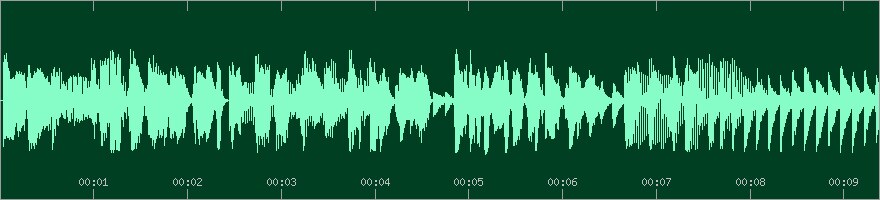
The other half of the problem is presentation. If you build your own player or browse UI, a flat seek bar tells the listener nothing about where the quiet intro ends and the chorus begins. A precomputed waveform makes the file legible at a glance.
Three mature open-source projects cover this ground — Chromaprint, aubio and audiowaveform — and they solve different halves of the same job. Here is how to pick, and how to wire them into a nightly pipeline.
TL;DR / Quick Verdict
- Do you want to find duplicate and near-duplicate audio files? Use Chromaprint via its
fpcalcCLI. It is the fingerprint engine behind MusicBrainz Picard and the AcoustID service, designed specifically for identifying near-identical audio. - Do you want tempo, beat positions, onsets, or pitch from audio? Use aubio. It is the only one of the three that analyses musical content rather than producing an identity key or a picture.
- Do you want waveform images or waveform data for a player UI? Use audiowaveform. It outputs compact binary/JSON waveform data and renders PNG strips at any zoom level.
- Do not use waveform data as a fingerprint. Two different masters of the same song can look nearly identical while being different files, and two encodings of the same master can render differently.
Tool Comparison Table (live data, September 2026)
| Tool | What it produces | Language | Latest release | Last commit | Stars |
|---|---|---|---|---|---|
| Chromaprint | Compact audio fingerprint for identification | C++ | 1.6.1 (2026-07-28) | 2026-07-28 | 1,383 ⭐ |
| aubio | Onsets, beats, tempo, pitch, MFCCs | C (Python bindings) | 0.4.9 | 2026-04-10 | 3,761 ⭐ |
| audiowaveform | Waveform data (.dat/JSON) and PNG renders | C++ | 1.10.3 (2025-08-20) | 2025-08-24 | 2,163 ⭐ |
Read the maintenance column carefully. Chromaprint shipped 1.6.1 in July 2026 and is actively maintained. audiowaveform is stable but slower-moving, and upstream development has moved to Codeberg. aubio is the odd one out: the repository is committed to (April 2026) but the newest tagged release is 0.4.9, so distribution packages and the PyPI wheel lag well behind the source tree.
Scenario Decision Matrix
| Your goal | Tool | Why |
|---|---|---|
| Find duplicates and near-duplicates in a library | Chromaprint (fpcalc) | Fingerprints match across re-encodes and small edits |
| Verify a recording matches a known release | Chromaprint + AcoustID | The fingerprint format is the lookup key for that service |
| Detect tempo or beat grid for a DJ/analysis tool | aubio | Purpose-built onset and beat trackers |
| Trim silence or split long recordings | aubio | Onset detection gives you the cut points |
| Show waveform previews in a web player | audiowaveform | Generates data once, renders many sizes cheaply |
| Render a chapter map for a podcast archive | audiowaveform | Zoom-level rendering from one data file |

Chromaprint — Identity, Not Analysis
Chromaprint’s output is a fingerprint: a compact string that identifies a piece of audio by its content. The README is refreshingly blunt about the design trade-off — it is not a general-purpose audio fingerprinting library, it trades precision and robustness for search performance, and its target cases are full-file identification, duplicate detection and long-stream monitoring.
You almost never call the library directly; you call fpcalc, the bundled command-line utility that MusicBrainz Picard uses:
| |
Fingerprints are exact-matchable offline, which makes them immediately useful for duplicate detection without any network call: identical files yield identical fingerprints. If you want to identify unknown audio rather than compare your own files, the fingerprint is designed to be submitted to the AcoustID service, which is what PyAcoustid does:
| |
| |
If you build Chromaprint from source, note that the FFT backend is a build-time choice. FFmpeg is preferred on Linux and Windows, macOS uses the system vDSP framework, and FFTW3 is available but GPL — which makes the resulting binary GPL too. KissFFT is the bundled fallback when nothing else is found and is the slowest option:
| |
aubio — The Musical Analyser
aubio listens to audio and reports events: when a drum is hit, what frequency a note is, how fast the melody moves. It provides onset detection, pitch detection, beat tracking, tempo estimation, MFCC computation and even MIDI emission from live input.
The fastest way to see it work is the CLI suite:
| |
For anything beyond a one-off, use the Python bindings and drive the detector yourself:
| |
Two practical notes. First, aubio works on decoded audio, so do the decoding with FFmpeg and hand it a WAV or use a source that reads your format. Second, onset sensitivity is the parameter people fight with: too sensitive and every cymbal becomes a cut point, too conservative and you miss the actual note. Always tune against a handful of representative tracks before running it across a library.
Because aubio’s tagged releases are old but the source tree is alive, container builds should pin an explicit compiler toolchain or use a distribution package rather than expecting a fresh PyPI wheel to cover every platform.
audiowaveform — Turning Audio Into Something You Can Look At
audiowaveform does one job extremely well: it converts audio into waveform data, and then renders that data as an image. The data step combines channels into a mono signal, then computes minimum and maximum sample values over groups of N samples (N set by the zoom level), producing a min/max pair per group.
That architecture is the important part. You generate waveform data once, then render as many sizes and zoom levels as you like from the same file:
| |
Lower -z values give a shape that resolves individual transients; higher values compress the file for long recordings. For a web player, generating .dat at a couple of zoom levels and rendering on demand is far cheaper than rendering a fixed PNG for every track at every breakpoint — which is exactly the pattern waveform-based players use.
Newer development happens under the Codeberg repository, while GitHub remains the home of the existing packages, releases and documentation. Debian and Ubuntu users can install from the upstream Debian packages or the PPA; everyone else builds with CMake.
Wiring It Into a Nightly Pipeline
None of these tools ship official multi-arch container images, so build a small image that bundles them. FFmpeg covers decoding, libchromaprint-tools provides fpcalc, and the Python layer handles orchestration:
| |
A duplicate sweep using only local fingerprints — no service calls, no API keys:
| |
And a waveform pass for whatever frontend renders your library:
| |
Keep both jobs incremental. Fingerprinting a large lossless library is decode-bound and will saturate every core you give it; a cron job that re-processes only files newer than the last waveform is dramatically cheaper than a full sweep.
Pitfalls and Performance Notes
- Fingerprints are not audio quality scores. Two encodings of the same master produce matching fingerprints even if one is a 96 kbps transcode. Fingerprint-based dedupe finds content duplicates, not the best copy — pick the keeper by bitrate, sample rate and lineage, not by fingerprint.
- Duration is part of the signal. A radio edit and the album version of the same song are genuinely different recordings, and their fingerprints will not match. Treat a duration difference of more than a second as a different track.
- Decoding dominates runtime. All three tools eventually decode with FFmpeg. Put the CPU budget there: fingerprint FLACs, not 24/192 files, if you control the source.
- Waveform data has a resolution floor. Rendering a 90-minute DJ set at very low zoom produces a
.datfile large enough to notice in a web payload. Choose zoom per content length. - Watch the licensing of build options. Chromaprint built against FFTW3 becomes GPL-licensed. If you distribute a container image, prefer the FFmpeg or KissFFT backend and document the choice.
- Frozen releases need pinned builds. aubio’s newest tag predates current compilers. Pin your image digest so a rebuild does not silently switch to a broken source build.
FAQ
Can I find duplicate tracks without an internet connection?
Yes. fpcalc computes fingerprints locally, and identical audio produces identical fingerprint strings, so a local script can find exact duplicates offline. Identifying unknown recordings against a database is what requires the AcoustID service and an API key.
Does a fingerprint survive re-encoding at a lower bitrate? That is precisely what it is designed to do. Chromaprint’s fingerprints match near-identical audio, so a re-encode at a different bitrate will typically match its source. Very aggressive low-bitrate transcodes or heavy processing can break the match.
What is the difference between a fingerprint and waveform data? A fingerprint is a deliberate, lossy summary optimised for comparison — you can check whether two files are the same recording, but you cannot reconstruct the audio. Waveform data is a downsampled min/max envelope for visualisation; it carries no identity guarantee at all.
Do I need aubio if I already use Chromaprint? Only if you care about musical content rather than identity. Chromaprint cannot tell you the tempo or where the beats are. aubio cannot tell you whether two files are the same song. They are complementary, not competing.
How do I show waveforms in a self-hosted player?
Generate waveform JSON or .dat files server-side with audiowaveform as part of your scan job, store them next to or in a database alongside your tracks, and have the frontend render from the data. This avoids shipping pre-rendered images per viewport size and keeps the payload small.
Which of the three has the strongest upstream maintenance? Chromaprint is the most actively released right now (1.6.1, July 2026). aubio has active commits but stale tagged releases. audiowaveform is stable and in maintenance mode, with primary development moved to Codeberg. None of the three is abandoned, but they warrant different levels of build pinning.
For related reading, see our music library management guide and the self-hosted music server comparison. If you need to inspect metadata rather than audio content, the audio metadata libraries comparison covers that layer.
💰 想测试你的市场判断力?我用 Polymarket 做预测市场交易——这是全球最大的预测市场平台,从大选结果到技术监管时间线,什么都可以押注。和赌博不同,这是真正的信息市场:你懂的信息越多,胜率越高。我靠预测技术相关事件的走向已经赚了不少。用我的邀请链接注册:Polymarket.com